
What We Offer
Bisque & Glaze Firing
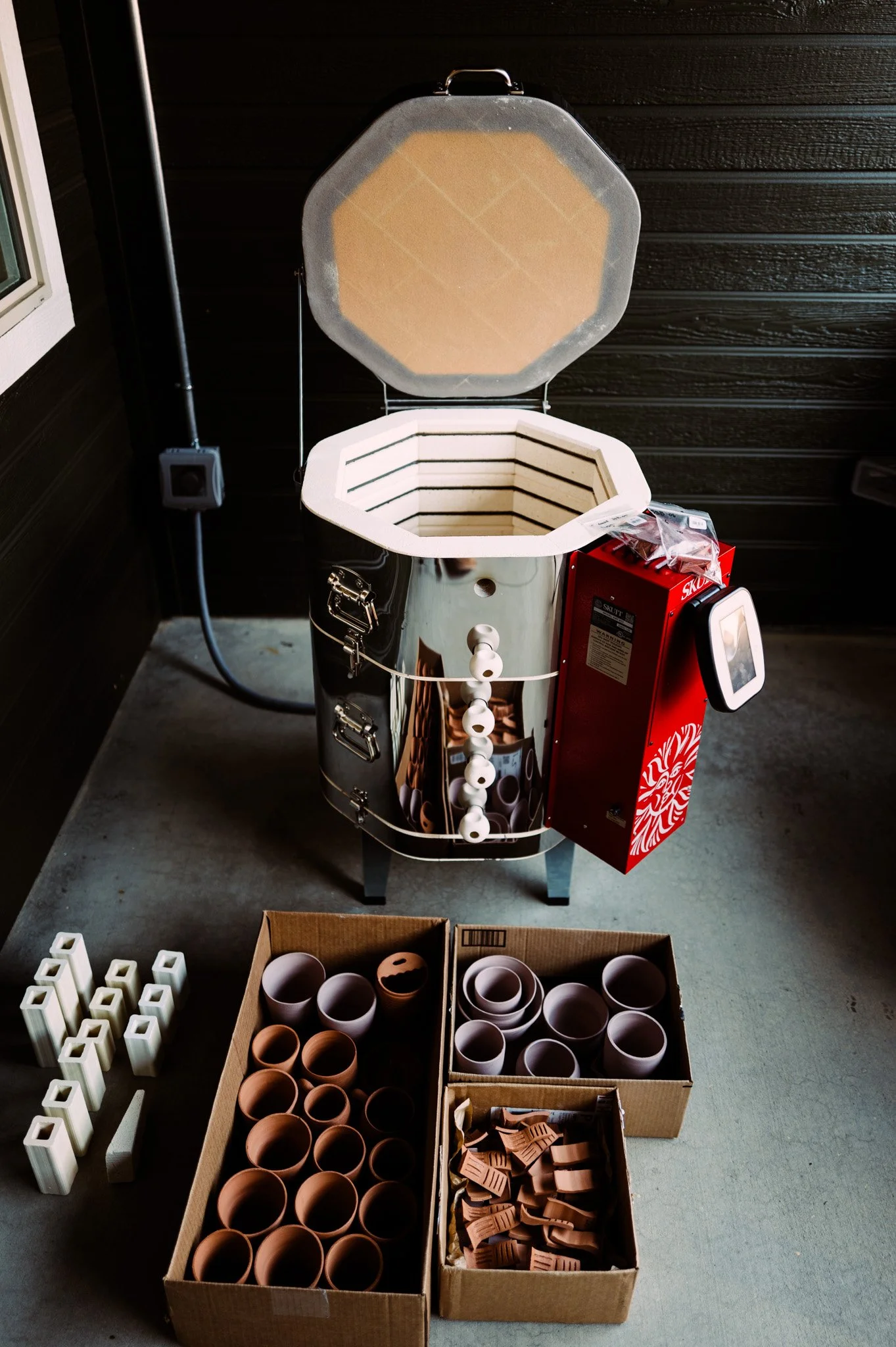
Standard firing - Firing at my standard firing schedules∆06 Bisque Firing
Small items - $3.00 per item
Half shelf - $10.00
Full shelf - $18.00
Full kiln - $50.00
∆5.5 Glaze Firing
Full shelf - $26.00
Full kiln - $80.00
Standard Services
Custom firing - choose your day and Define your firing schedule, or, if you don't have a custom firing schedule, I'll fire to a standard ∆5, 5.5, or 6.∆06-∆04 Bisque Firing with Longer Candling Time
∆5, ∆6 Glaze Firing
Reach out to discuss firing at lower or higher temperatures
Additional Firing Services
Finish firing - Define your firing scheduleLuster Firing
Contact me to discuss a custom firing schedule and get pricing.
Why use a kiln share instead of a community studio?
Community studios are wonderful places. They’re where many potters first fall in love with clay, take classes, meet other creatives, learn the fundamentals of the craft, and build community.
But as many potters continue developing their work (or if they come into the space wanting to do something very specific), they sometimes run into a few limitations.
Firing schedules can be fixed. Turnaround times can stretch to a couple of weeks. And if you’re experimenting with glazes, surfaces, or firing techniques, waiting that long between tests can make the learning process feel a little slow.
That’s exactly where the idea for this kiln share came from.
When I started pottery, I quickly realized I wanted to experiment with things like glaze combinations, firing schedules, and luster finishes. I also wanted to understand how changes in the firing process affected the final result.
But when your work goes into a large community kiln with dozens of other pieces, you don’t always get much insight into what happened during the firing.
And if you’re waiting two weeks to see results, it can mean you spend the next two weeks making work based on assumptions that may not hold up once the kiln opens.
Having more visibility into the firing process (and a faster turnaround time) makes it much easier to experiment, learn, and refine your work.
I was also curious about trying different techniques and other specialty firings, which often require different firing approaches than standard community kiln loads.
A small kiln share makes that kind of experimentation much more possible.
This studio isn’t meant to replace community spaces — those studios are an important part of the ceramics community. Instead, the goal is simply to offer another option for potters who are working at home, experimenting with new ideas, or looking for a little more control in how their work gets fired.
And if you’re looking for a community studio in Boise…
I strongly recommend Clay Collective or The Potters Center. I took my 6-week intro class at Clay Collective and absolutely loved it. The class was small and intimate, our instructor(s) gave us autonomy and helped us learn to make whatever it was that we wanted to make. Clay Collective also offers Thursday Night Clay Club where you can create in a community setting with instructor available to answer questions and assist with techniques.
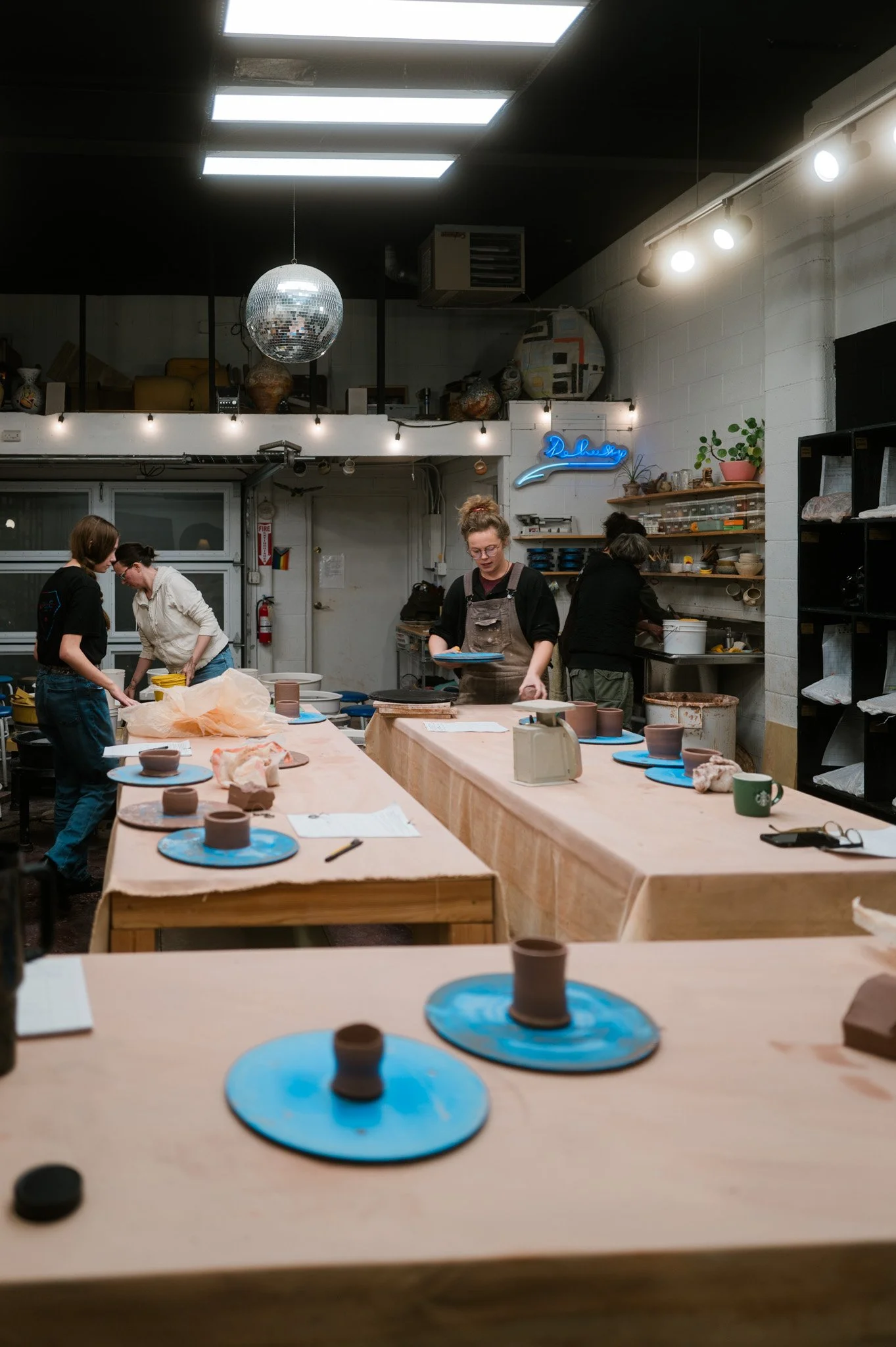
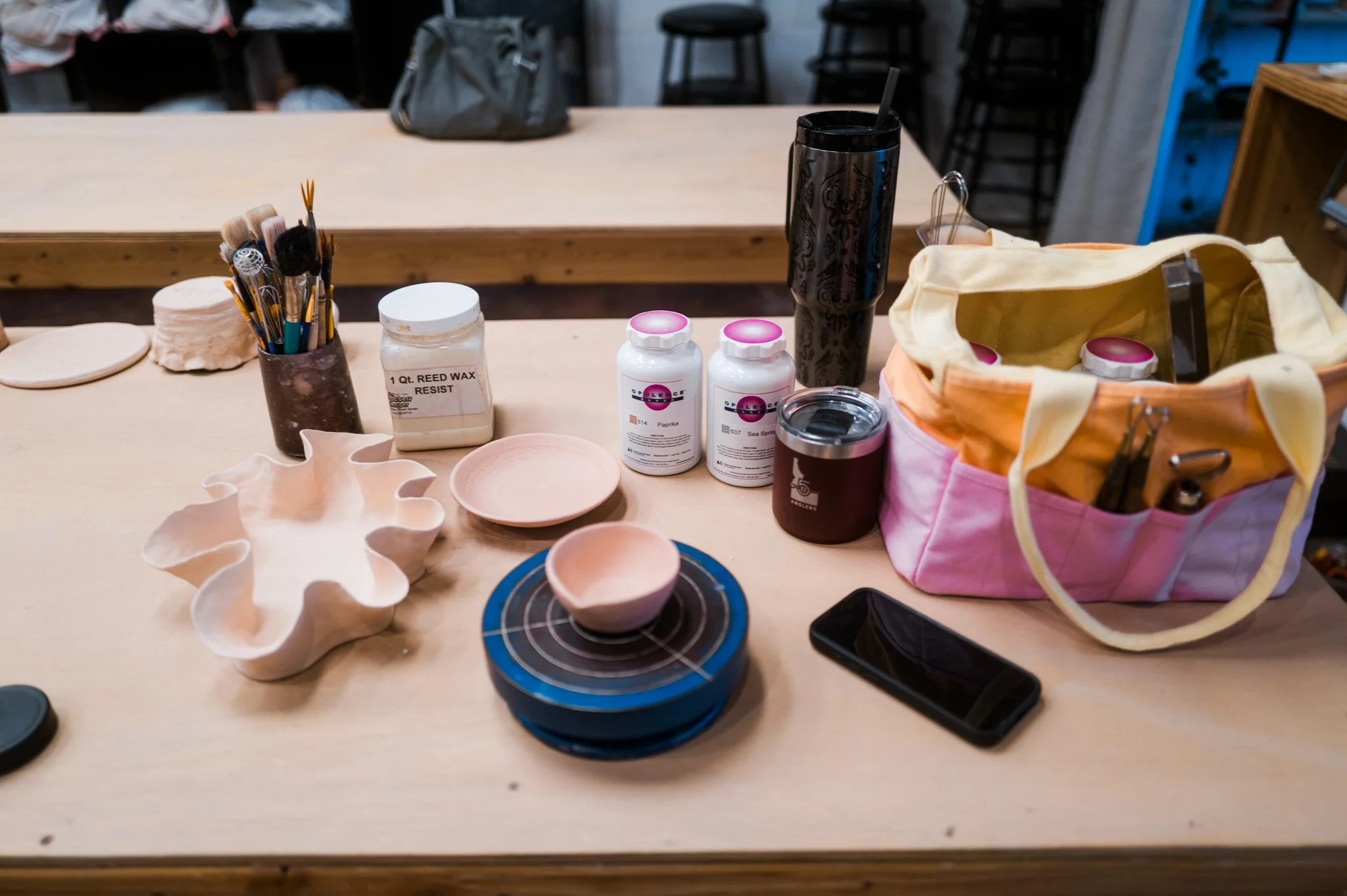

Clay Collective in Boise, IdahoThe Potters Center is where I buy nearly all of my stuff in town, and though I haven’t taken any instruction there, there is some overlap in instructors with Clay Collective, so I’m confident that their instruction is great, too.
Rules
-
Clay
Commercial clay bodies only. Your clay must be compatible with the cone you plan to fire to.
When submitting a firing request, you’ll be asked to provide the clay body name and the intended cone temperature.
Glaze
All glaze-fired work must have clean, glaze-free bottoms.
If glaze touches the kiln shelves, it fuses permanently. Which is great for pottery… less great for kiln furniture.
Homemade Glazes
Homemade glazes are welcome only after test tiles have been fired in this kiln first.
I’m happy to fire test tiles for free whenever there’s open space in the kiln at my standard firing schedules. If you'd like your test tiles fired on a specific custom schedule, they can be included as part of a paid firing.
Documentation
All work must include documentation showing the clay body and glaze firing ranges. This can be:
a photo of the clay box label
a glaze bottle label
a receipt
manufacturer documentation
If I cannot verify the firing range, I unfortunately cannot fire the work.
No mystery clay allowed in the fire box.
-
This kiln is equipped with Advancer shelves, which allow for more flexibility with glaze work but still require responsible glaze application.
Advancer Shelves allow for an extremely easy removal of pieces with glaze drips, however, if you’re working with glazes that are known to run — or if you’re experimenting with layered or homemade glazes — you may still be asked to use additional drip protection.
When in doubt, ask. I’d always rather plan ahead than grind shelves later.
-
All glaze-fired work must be bisque fired first, unless we’ve discussed otherwise in advance.
Pieces must be completely dry before firing. Damp clay and kilns are a bad combination.
The bottoms of all glazed pieces must be completely free of glaze.
If something arrives damp or risky for the kiln, I’ll ask you to take it home to dry a bit longer.
The kiln appreciates preparedness.
-
Because this is a small home studio, space is limited. My husband was not prepared for our house to turn into a pottery studio, so let’s be courteous.
Drop-off
Bisque work must arrive bone dry. I can’t store pieces while they finish drying.
Pickup
Finished work must be picked up within 48 hours of notification.
After that, a $5 per day storage fee begins.
If pieces are not picked up within 7 days, they will be moved to offsite storage and pickup will require scheduling.
Pieces not picked up within 30 days may be disposed of.
I truly hope this never happens, but I also can’t turn my house into a long-term pottery warehouse.
-
If you’d like a custom firing schedule, I’m happy to accommodate when possible, outside of my standard firing schedule.
Please reach out in advance so we can review the details together.
When dropping off work for a custom firing, please plan to spend a few minutes walking through the programming so we make sure everything is set exactly how you want it.
-
The kiln will be loaded, unloaded, and operated by the studio owner only.
This helps ensure the kiln furniture, elements, and firing schedules are handled consistently and safely.
If you have significant kiln experience and would like to assist with loading or unloading, feel free to reach out in advance and we can discuss scheduling time to do that together.
You’re welcome to be present for loading or unloading if you'd like — many people enjoy seeing how things are stacked and how they come out — but it’s not required.
Note: If you wish to be present during loading and unloading, this will add time to your turnaround since it will have to be scheduled around my work schedule.
-
Firing ceramics always involves some level of unpredictability.
Even when everything is done perfectly, things can still go sideways.
Possible risks include:
glaze running or sticking
cracking or warping
glaze defects or color changes
pinholing or blistering
kiln atmosphere variations
pieces tipping or shifting during firing
thermal shock
the occasional dramatic clay explosion
Sharing kiln space also means your work may be fired alongside other artists’ pieces.
While great care is taken when loading, accidents can happen.
Ceramics teaches us many lessons. One of them is humility.
-
While every effort is made to fire work safely and carefully, results cannot be guaranteed.
The studio is not responsible for:
glaze defects
cracking or warping
kiln accidents
firing failures
unexpected glaze reactions
Witness cones will be used in every firing to verify that the intended temperature was reached.
-
Renters are financially responsible for damage caused by their work.
This includes (but is not limited to):
glaze drips that damage kiln shelves
glaze fusing to kiln furniture
exploded pieces damaging shelves or elements
clay or glaze damaging kiln walls
Costs may include shelf grinding, kiln furniture replacement, element repair, or labor required to clean or repair the kiln.
Thankfully this is rare, but it’s important that everyone understands the responsibility.
-
Full payment is required at the time of dropping off and will be done through my website.
Full Load – Custom Schedule
Cancellations made 48 hours in advance will receive a full refund.
Full Load – Standard Schedule
Cancellations made 48 hours in advance will receive a full refund.
Cancellations made within 48 hours will be refunded only if the kiln space can be filled by another artist’s work.
FAQ
-
My standard bisque program includes a relatively short candle to help remove any remaining moisture before the kiln ramps up.
If your work needs a longer candling period, that can be accommodated as part of a custom firing schedule.
-
If you don’t want to define your firing schedule, but you know you want to fire to ∆5 (or ∆5.5… or ∆6), I’m happy to take care of the settings using firing schedules I know work in my kiln. Just say “Yo, I want to fire to ∆5” and I’ll do the rest. (Or… Perry at Skutt will technically do the rest. Thanks, Perry.)
-
If you have a full kiln load, I’ll fire the day after you drop off your work.
If you do not have a full kiln load, I will post available kiln space on my Instagram so that anybody else with minimal items can join your firing. It will not be fired until the kiln can be filled and I can not promise a timeline, but I will keep you updated.
-
Please fill our the scheduling form and I will get back to you within 1-2 days. Please note that I do not typically respond to inquiries on weekends.
-
You are able to pay in cash, or pay with a card via:
An invoice with a digital payment link
Venmo
-
For a full kiln load on one of my standard firing schedules: Depending on the time of drop-off, your work will typically be ready for pickup between 24-48 hours. This will be confirmed at scheduling.
For a partial kiln load on one of my standard firing schedules: Turnaround time can not be guaranteed. Your work will fire when there is enough work to fill the kiln.
For custom firings: Turnaround time will be discussed when the firing is scheduled.
-
One of the perks of running a home studio is that I’m around most of the time.
Drop-off and pickup are available Monday through Friday from 7:00 AM – 3:00 PM, as long as we coordinate in advance.
Weekend availability is sometimes possible, but will need to be discussed beforehand.
If you need a drop-off or pickup time outside those hours, I’m generally pretty flexible, we’ll just need to plan ahead.
-
Short answer: probably not.
Because this is a small home studio, space is limited and I can’t store large amounts of pottery for extended periods of time. But, I’m always happy to accommodate if I can.
Please plan to drop work off during the designated windows unless we’ve arranged something in advance.
-
If you are dropping off work and don’t have enough to fill the kiln, your work will not be fired until there is enough work to fill the kiln.
This is because a full kiln holds and distributes heat more evenly, fires and cools more predictably and consistently, and is more efficient.
-
Sort of.
You can download the Skutt mobile app, and I’m happy to add you as a guest so you can keep an eye on how your firing is going. That being said, their app is imperfect and a bit buggy at times, but you are able to tell how things are going for the most part.
But while I appreciate the enthusiasm, kiln firings take 12-24 hours, so unfortunately this is not a “bring snacks and hang out all day” situation, even if you’re an extremely cool person. (Unless you bring like… really good snacks…)
-
Yes. (And no…)
Witness cones are used in every standard firing to verify that the kiln reached the intended temperature.
If you would like to use cones with your custom firing schedule, you’re absolutely welcome bring them.
-
Large pieces are welcome, but they must fit safely within the kiln.
If you’re unsure whether something will fit, feel free to send a photo with measurements before scheduling or check the about page for kiln dimensions.
Taller items that reduce the number of shelves may be priced as more than one shelf.
-
I love drippy glazes, they’re my absolute favorite, which is exactly why I use Advancer Shelves.
Advancer Shelves nearly eliminates the risks of broken/damaged pieces and kiln shelves associated with drippy glaze probs.
That being said, drippy glazes aren’t my worst nightmare and I am equipped to handle them.
-
Yes, as long as you’re using food-safe clay and glazes rated for the firing temperature and you are firing to vitrification.
It’s the artist’s responsibility to ensure materials are appropriate for food use and requested firing temperature meets materials requirements.
-
Yes, but this is not a teaching studio.
The kiln share works best for potters who already understand their clay, glazes, and firing temperatures.
If you’re new to pottery, I recommend continuing classes at a community studio until you’re comfortable managing your work independently.
There’s no time expectation for this (given that I was ready to manage my own stuff within a month, I understand quick progress) but it all depends on how you personally progress.